

Why Indian SMEs Are Moving to Custom ERP Software, and What It Costs
Indian SMEs are outgrowing Excel, Tally add-ons and rigid off-the-shelf ERPs. Here's why custom ERP software is becoming the practical choice, what modules to start with, and what it really costs in 2026, from ₹3 lakh for a focused system to ₹25 lakh+ for complex operations.
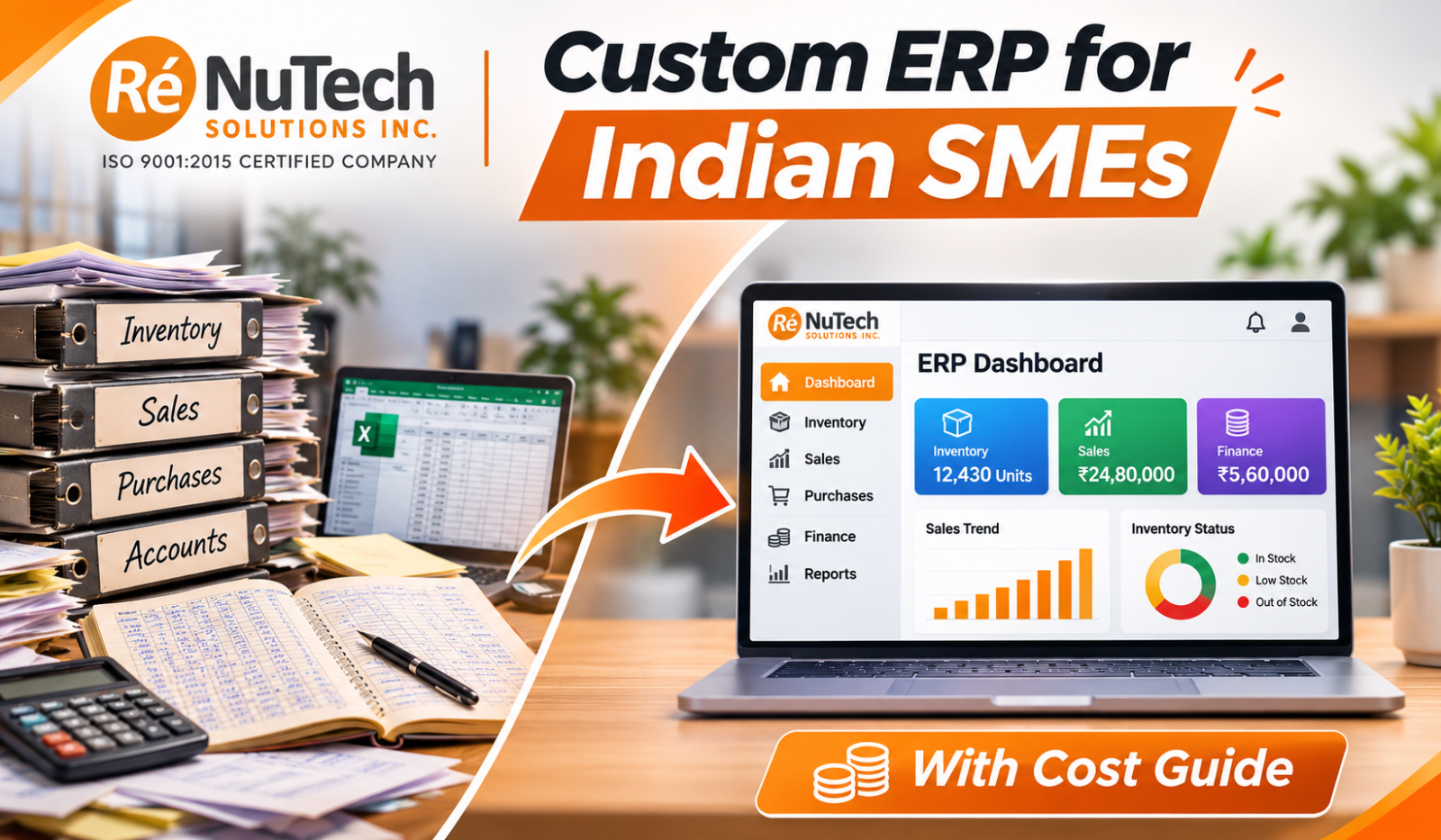
Quick answer: Indian SMEs are moving to custom ERP software because their operations have outgrown Excel sheets, Tally add-ons, and WhatsApp groups, and because off-the-shelf ERPs often force them into processes that don't match how Indian businesses actually run. In 2026, a focused custom ERP with 2–3 modules typically costs ₹3–8 lakh, a mid-size multi-module ERP ₹8–25 lakh, and a complex multi-location system ₹25 lakh and above, plus 15–20% a year for hosting and maintenance.
Most of the SME owners we talk to don't start by saying "we need an ERP." They say things like "stock in the system never matches stock in the godown," "my accountant spends three days closing the month," or "I only find out about a delayed order when the customer calls." Those are ERP problems, even if nobody calls them that yet.
This post explains why more Indian SMEs are choosing custom ERPs, what a sensible first version looks like, and what you should realistically budget.
What Is Custom ERP Software?
ERP (Enterprise Resource Planning) software connects the core parts of a business, such as sales, purchasing, inventory, production, accounts, HR and payroll, into one system with one database. Instead of every department keeping its own records, everyone works from the same live data.
Custom ERP software is built around your specific business rather than bought as a fixed product. You choose the modules, the workflows, the approval rules, the reports and the screens. You also own the code and the data.
Why Indian SMEs Are Moving to Custom ERP
1. Excel and Tally have hit their limit
Tally is excellent accounting software, and most SMEs should keep using it for accounts. But it was never meant to run production planning, multi-godown inventory, dealer networks, or field sales. When a business grows, the gaps get filled with Excel files and WhatsApp messages, and that's where errors, duplicate work, and delays creep in. A custom ERP can handle operations and still sync with Tally for accounting.
2. Off-the-shelf ERPs don't fit Indian ways of working
Credit-based dealer billing, scheme and discount structures, job work, multiple GST registrations, cash-and-carry plus B2B on the same counter: these are everyday realities for Indian SMEs. Global ERP products can handle many of them, but often through expensive customisation or awkward workarounds. A custom build starts from your process instead.
3. GST compliance needs to be built in, not bolted on
E-invoicing, e-way bills, HSN-wise reports, and GSTR reconciliation are much easier when you generate invoice data correctly at the source. A custom ERP can connect directly to the GST e-invoice system through authorised APIs, so it generates IRNs and QR codes automatically.
4. Per-user licence costs add up
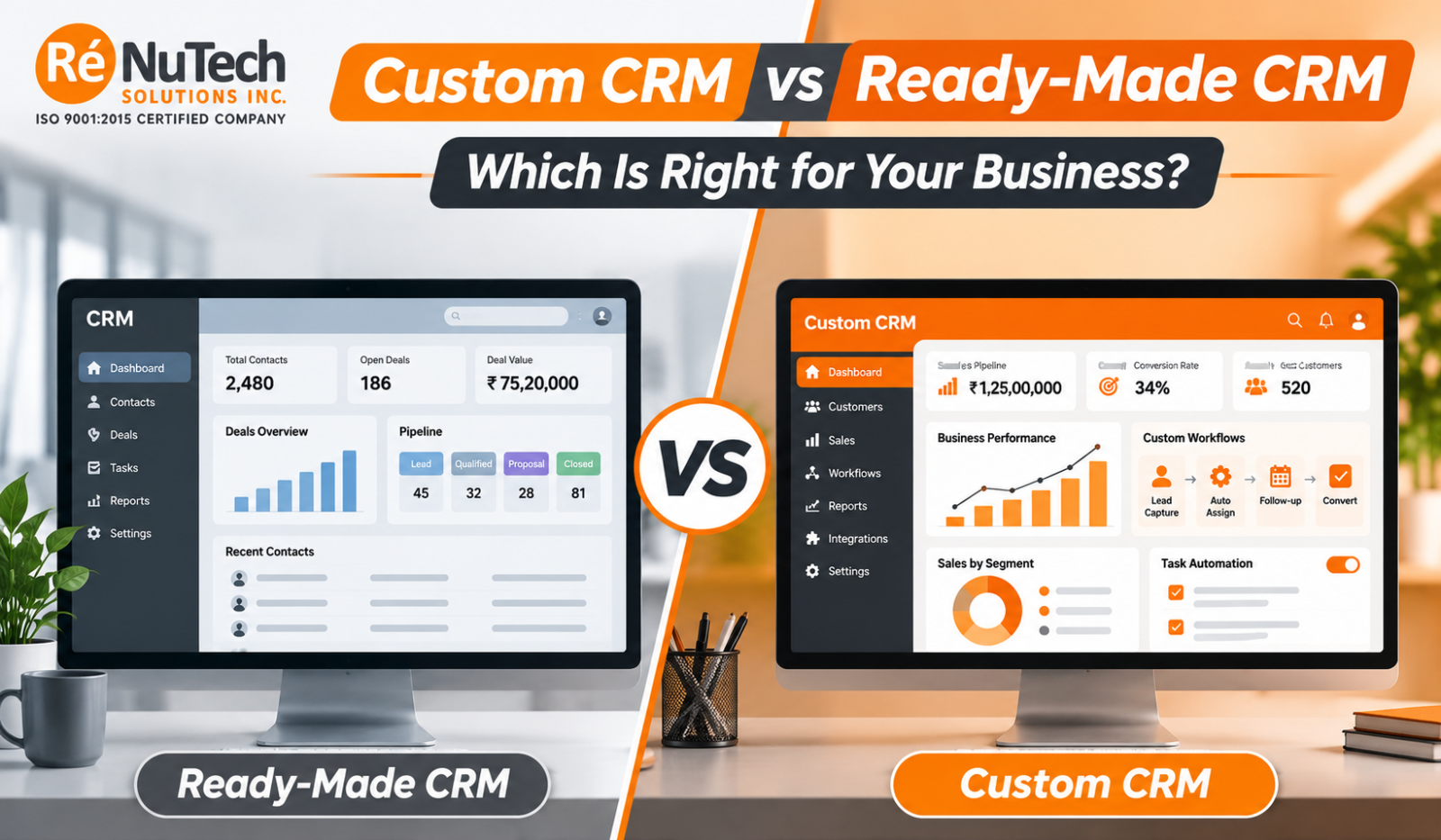
Subscription ERPs charge per user, per module, or both. That's fine for five users. For a business with 30 staff across a factory, two warehouses and a sales team, the yearly bill can exceed what a one-time custom build would cost. We covered the same maths for CRMs in custom CRM vs ready-made CRM, and it applies to ERP even more strongly.
5. Development and cloud hosting have become affordable
Modern frameworks like Laravel, ready-made modules, and cloud servers mean a custom ERP no longer needs a crore-rupee budget. A good development partner can reuse proven building blocks and focus custom work only where your business is different.
6. SMEs want one system, not five apps
Many businesses run a CRM, an inventory app, a billing tool, a payroll app, and spreadsheets in between. A custom ERP brings these together, or connects them through APIs, so a lead becomes an order, the order reserves stock, dispatch updates the customer, and the invoice flows into accounts without anyone retyping it.
7. Owners want their data on their terms
With a custom ERP, your data sits on your server or cloud account. You decide who sees what, how long it's kept, and how it's backed up, and you aren't locked into a vendor's pricing or roadmap.
Common ERP Modules for Indian SMEs
You don't need all of these on day one. Most successful ERP projects start with the 2–3 modules that cause the most pain today.
How Much Does Custom ERP Software Cost in India?
Here's what custom ERP projects typically cost in 2026. Prices exclude 18% GST and vary with complexity, integrations, and number of user roles.
Ongoing yearly costs
Costs people forget
What Drives the Cost Up or Down?
Custom ERP vs Off-the-Shelf ERP
Off-the-shelf is often the right call for very small teams with standard processes. Custom tends to win once your processes are distinctive, your team is larger, or licence and customisation costs keep growing.
A Smarter Way to Build: Start Small, Grow in Phases
The biggest risk in any ERP project is trying to do everything at once. A phased approach keeps cost and risk under control:
Your team starts getting value within a few months, and each phase is shaped by real feedback from the previous one.
Real Example From Our Work
Intheflo is a multi-tenant CRM and ERP platform we built in Laravel that brings leads, orders, inventory, vendors and payroll into one system, serving multiple businesses from a single codebase. We've also built industry-specific systems such as our school ERP & LMS and booking systems.
Mistakes to Avoid
Frequently Asked Questions
How much does custom ERP software cost in India?
A focused custom ERP with 2–3 modules usually costs ₹3–8 lakh. Mid-size systems with 5–7 modules range from ₹8–25 lakh, and complex multi-location ERPs cost ₹25 lakh or more, plus yearly hosting and maintenance.
How long does it take to build a custom ERP?
A focused first phase usually goes live in 2–4 months. Larger ERPs are delivered in phases over 4–12 months.
Can a custom ERP work with Tally?
Yes. Many SMEs keep Tally for accounting while the custom ERP handles sales, inventory, production and operations, with data syncing between the two.
Is custom ERP software suitable for small businesses?
Yes, if the business has processes that ready-made tools don't handle well or is growing quickly. Very small teams with standard processes may be better served by off-the-shelf software at first.
Does custom ERP support GST e-invoicing and e-way bills?
Yes. A custom ERP can integrate with the GST e-invoicing system and e-way bill portal through authorised APIs to generate IRNs, QR codes and e-way bills automatically.
Who owns a custom ERP?
With the right contract, you own both the source code and the data. Confirm this in writing before the project starts.
Thinking About an ERP for Your Business?
We start with a free process review: we look at how your business runs today, identify which modules will make the biggest difference, and give you a phased plan with clear costs. Re NuTech Solutions is an ISO 9001:2015 certified IT and digital marketing company in New Delhi that builds ERP solutions and business applications for SMEs across automobile, e-commerce & D2C, healthcare and education.
Already have a system that needs care? Our maintenance and support team can help. And if your website needs an upgrade too, see our guide on website development cost in India.
Book a free ERP consultation or explore our case studies.
Talk to the Re NuTech team for a free consultation.

Comments